Microclimate and Topographical Setting
Montreux sits at an altitude of 390 metres above sea level along the northeastern shore of Lake Geneva (Lac Léman) in the French-speaking Canton of Vaud. The municipality occupies a sheltered bay protected from cold northern and northwesterly winds (the Bise) by the wall of the Vaudois Prealps, including Rochers de Naye (2,042 m) and the Dent de Jaman.
This natural barrier creates an extraordinary microclimate often described as the "Swiss Riviera." The local temperature profile allows Mediterranean vegetation—such as maritime pines, cypress, fig trees, and palm species—to thrive directly alongside freshwater mountain bays. Across the water, the snowy crests of the French and Swiss Chablais Alps, dominated by the Dents du Midi (3,257 m), rise steeply from the southern shoreline.
Château de Chillon & The Shoreline Axis
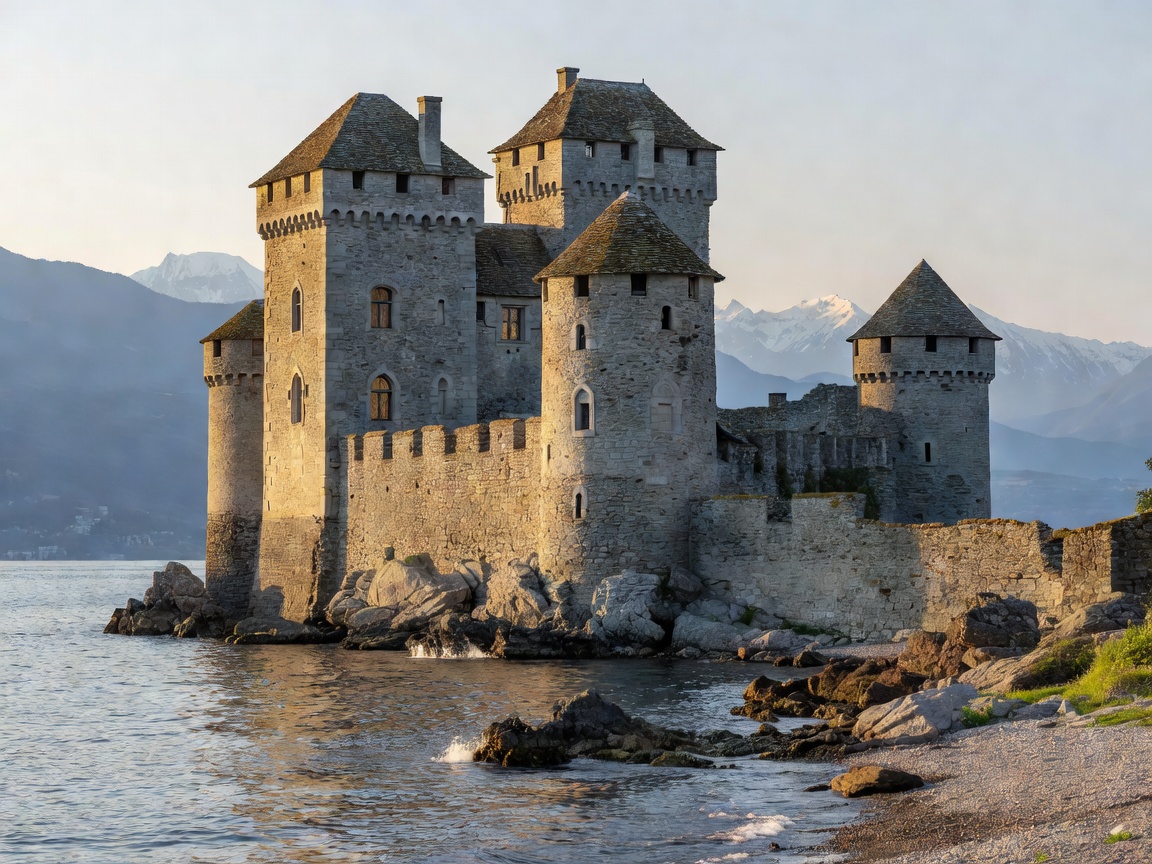
Three kilometres south of Montreux's central promenade stands Château de Chillon (Chillon Castle), situated on an isolated limestone rock outcrop jutting into Lake Geneva. Built and fortified primarily by the House of Savoy between the 12th and 13th centuries, the fortress controlled the narrow strategic defile between Lake Geneva and the steep mountain drop, demanding tolls from merchants traversing the Great St Bernard Pass toward Italy.
The castle's subterranean vaults, carved into the natural rock base, served as a historic state prison, famously holding the Genevan prior François de Bonivard from 1530 to 1536—an imprisonment immortalized by Lord Byron in his 1816 work The Prisoner of Chillon. Today, visitors can walk the scenic, floral shoreline path (Chemin Fleuri) from central Montreux directly to the castle gates in approximately 45 minutes.
The UNESCO Lavaux Terraced Vineyards
Extending immediately west from Montreux toward Lausanne are the Lavaux Vineyard Terraces, an 800-hectare UNESCO World Heritage landscape dating back to 11th-century Benedictine and Cistercian monasteries. The steep slopes are held by miles of stone retaining walls rising hundreds of metres above Lake Geneva.
| Feature | Lavaux Vineyard Region | Rochers-de-Naye Cogwheel Line |
|---|---|---|
| Altitude Range | 375 m to 600 m | 390 m (Montreux) to 2,042 m (Summit) |
| Primary Experience | Chasselas wine terraced walks, medieval stone cellars (St-Saphorin) | Electric rack railway ascent, alpine marmot park, summit ridge |
| Transit Mechanism | SBB regional trains (Cully, Epesses) + Lavaux Panoramic train | Montreux–Glion–Rochers-de-Naye Railway (55-minute direct climb) |
| Optimal Season | September–October (grape harvest, golden foliage) | June–September (clear lake and alpine visibility) |
Ascent to Rochers de Naye
While Montreux feels sub-Mediterranean at lake level, the Montreux–Glion–Rochers-de-Naye cogwheel railway connects the palm trees of the shoreline to high-alpine terrain in just 55 minutes. Departing directly from Montreux SBB station, the rack railway climbs 1,652 vertical metres, passing the historic grand hotels of Glion and Caux before tunnelling through the crags of Rochers de Naye.
From the 2,042-metre summit platform, passengers overlook the entire arc of Lake Geneva from Geneva to Villeneuve, with visibility extending on clear days to the Jura Mountains to the north and the Mont Blanc massif to the south.
Pros and Cons: Staying in Montreux
Advantages
- Mild Winter & Spring Conditions: The sheltered microclimate means spring arrives earlier and autumn stays warmer than in high-valley towns like Zermatt or Lauterbrunnen.
- GoldenPass Rail Terminus: Montreux serves as the western terminus of the scenic GoldenPass Express line, which connects Montreux to Interlaken using variable-gauge bogies that switch between standard and narrow rail tracks without passenger changes.
- Cultural Sophistication: Architectural legacy of Belle Époque grand hotels, art galleries, and the world-renowned Montreux Jazz Festival held every July.
Disadvantages
- Limited Glacial Proximity: Montreux is not a ski-in/ski-out destination; accessing permanent snow requires taking trains east into Canton Valais or Canton Bern.
- High Accommodation Demand in Summer: Lakefront lodging during the peak festival window commands substantial premiums and requires booking months in advance.
Transit Advice
When riding the regional trains between Lausanne, Montreux, and St-Maurice, sit on the lake-facing side (the right side when travelling eastbound from Geneva/Lausanne) to enjoy uninterrupted views across the water toward the Savoy and Valais Alps. Passenger boats operated by the Compagnie Générale de Navigation sur le lac Léman (CGN) offer historic Belle Époque paddle steamer services directly connecting Montreux with Chillon Castle, Vevey, and Lausanne.